The Art of Luxury Solo Travel: A Complete Guide to Traveling Alone Beautifully & Safely
A warm, comprehensive guide to luxury solo travel — how to choose destinations, stay safe, dine alone with confidence, and travel beautifully on your own terms.
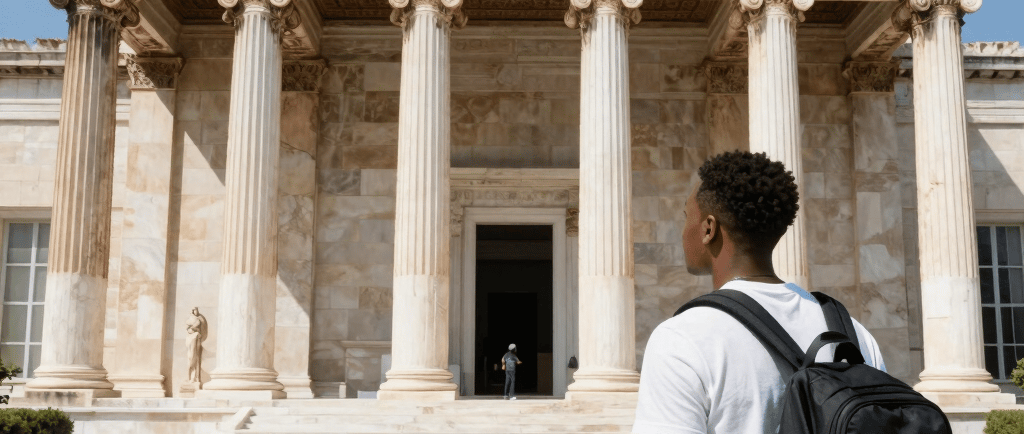
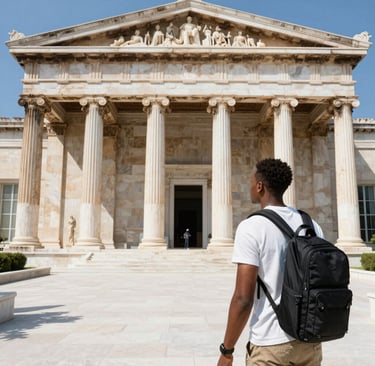
There's a moment that happens on almost every solo trip, usually somewhere between landing and settling into your hotel room, when it hits you: nobody is waiting for you to be ready. Nobody needs you to compromise on the restaurant, the museum, the wake-up time, or the route home. For a few days or weeks, the entire trip bends around you and only you. That feeling, more than any landmark or sunset, is the real luxury of solo travel.
Luxury solo travel has quietly become one of the fastest-growing ways people choose to see the world, and it makes sense. More people are working remotely, more people are single later in life or simply choosing to travel without waiting for a partner's schedule to align, and more people are realizing that "luxury" doesn't have to mean a couples' suite or a group tour with twenty strangers. It can mean traveling exactly the way you want, with the comfort, service, and care that makes you feel taken care of, even when you're the only name on the reservation.
If you've been dreaming about a solo trip but feel intimidated by the logistics, the safety questions, or that nagging fear of being lonely in a beautiful place, this guide is for you. Consider it the conversation you'd have with a well-traveled friend over coffee, the one who's done this dozens of times and has the wisdom (and the occasional cautionary tale) to prove it.
Why Solo Travel Feels Different When You Do It Well


There's a difference between traveling alone because you have no other choice and traveling alone because you've chosen it as the most luxurious way to experience a place. The first can feel like making do. The second feels like freedom.
When you travel solo with intention, every decision becomes a small act of self-respect. You wake up when your body wants to wake up. You linger over breakfast for an hour because the view of the harbor is doing something extraordinary with the morning light, and there's no one tapping their foot waiting to move on. You book the hotel room with the soaking tub because you deserve it, not because you're splitting the cost three ways and someone else wanted the room with two beds instead.
This is the heart of luxury solo travel: it's not about spending the most money, it's about spending your time, attention, and resources entirely on what makes the experience feel rich to you. Sometimes that's a five-star resort. Sometimes it's a tiny boutique guesthouse with four rooms and a chef who remembers your name by day two. Luxury, in this context, is really about intentionality.
Choosing the Right Destination for Your First (or Fiftieth) Solo Trip


One of the biggest mistakes people make when planning their first solo trip is choosing a destination based on what looks good in photos rather than how it will actually feel to navigate alone. A place can be breathtaking and still be exhausting if it requires constant vigilance, complicated transit, or a level of street smarts you haven't built up yet.


Let's address this directly, because it's usually the first question anyone asks when they hear you're traveling alone, especially if you're a woman: is it safe?
The honest answer is that solo travel is generally safer than the fear-driven narratives suggest, but it does require a different kind of awareness than traveling with a companion. When you're alone, you're more noticeable, and you're also more in tune with your surroundings because there's no one else to rely on. Both of those things can work in your favor if you approach them thoughtfully.
Some of the most effective safety habits are also the simplest. Sharing your itinerary with someone back home, even a loose outline of where you'll be and when, creates a safety net without adding stress to your trip. Choosing accommodations with good reviews specifically from solo travelers, rather than just high overall ratings, gives you a clearer picture of how a property treats guests who are on their own. Arriving in a new destination during daylight hours whenever possible takes a huge amount of pressure off that first, often disorienting, transition from airport to hotel.
Trusting your instincts is perhaps the most underrated safety tool there is. If a situation feels off, even if you can't articulate exactly why, you don't need a justification to remove yourself from it. This is your trip, and you never owe anyone an explanation for prioritizing your own comfort and safety.
It's also worth remembering that confidence itself is a form of safety. People who move through a space like they know where they're going, who make eye contact, who walk with purpose, tend to be far less likely to be targeted for anything, whether that's a scam, an unwanted approach, or simple pickpocketing. This isn't about performing toughness. It's about carrying yourself the way you would in your own neighborhood, because in many ways, for the duration of your trip, it is your neighborhood.
For a first solo trip, places that are walkable, well-lit, and have a strong culture of solo dining and solo travelers tend to feel the most welcoming. Cities like Lisbon, Kyoto, Copenhagen, and many parts of Italy have become beloved among solo travelers precisely because they're easy to move through, rich with things to see, and culturally comfortable with someone sitting alone at a café table for hours. As you build confidence, you can branch out into destinations that ask a little more of you, places with fewer English speakers, more complex transportation, or a different rhythm altogether.
The Truth About Safety (Because It Matters, But Not the Way Fear Wants You to Believe)
It's also worth thinking honestly about what kind of solo traveler you are. Some people crave total immersion, slow mornings, long walks, journaling on a balcony with a view. Others want a trip that's packed with activity, cooking classes, wine tastings, day trips, things that give structure to the day and create natural opportunities to meet people. There's no wrong answer, but knowing your own rhythm before you book will save you from planning a trip that looks amazing on paper but doesn't actually suit you.


Where You Stay Changes Everything


One of the quiet luxuries of traveling alone is that you get to pack and plan exactly to your own preferences, without negotiating space in a shared suitcase or compromising on an itinerary.
That said, there's a balance to strike between planning enough to feel secure and planning so much that there's no room left for spontaneity. A loosely structured day, perhaps one anchor activity in the morning and another in the late afternoon, leaves the middle of the day open for wandering, for following a smell of fresh bread down an alley, for sitting in a park longer than you planned because the light is perfect and you have absolutely nowhere else to be.
When it comes to packing, solo travelers benefit enormously from packing light. Without a partner to help carry bags or watch your things while you use the restroom, a single manageable suitcase or backpack makes everything from train platforms to hotel check-ins dramatically easier. Versatile, slightly elevated clothing, things that work for a museum in the morning and a nice dinner at night, mean you can move through your day without needing to return to your hotel to change, which matters more when you're the only one managing logistics.
A few small items make an outsized difference for solo travelers specifically: a portable charger so you're never anxious about your phone dying while you're navigating alone, a lightweight lock for hotel room safes or lockers in shared spaces, and a journal, because there's something about traveling alone that makes people want to write things down. The thoughts arrive differently when there's no one to say them out loud to.


Accommodation plays a bigger role in solo travel than it does when you're traveling with others, because your hotel or rental isn't just a place to sleep, it's your home base, your sanctuary, and often your social hub all at once.


This is where the "luxury" part of luxury solo travel really earns its keep. A beautiful hotel room with thoughtful lighting, a comfortable chair by the window, and excellent room service can transform a trip on the nights when you want to retreat and recharge. Many higher-end hotels have also gotten much better about welcoming solo guests, some have done away with the dreaded single supplement entirely, and others actively design experiences, communal dinners, wine hours, guided walks, that are perfect for travelers on their own who want company without commitment.
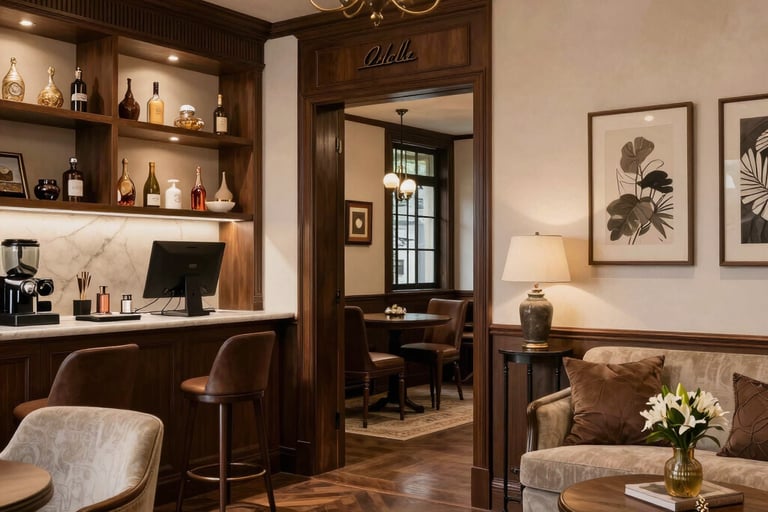
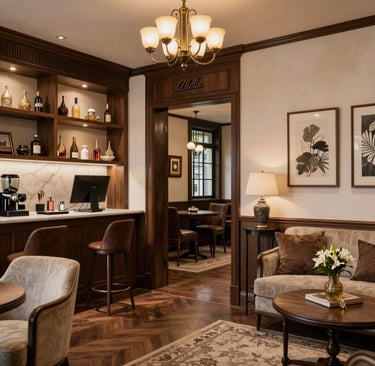
Boutique hotels and small luxury properties tend to be especially wonderful for solo travelers because the staff-to-guest ratio means you're far more likely to be recognized, remembered, and looked after. There's something deeply comforting about a concierge who knows your name, a server who remembers you like your coffee a certain way, or a host who quietly points you toward a restaurant that isn't in any guidebook. That kind of personal attention is often easier to find, and more meaningful, when you're traveling alone.


Boutique hotels and small luxury properties tend to be especially wonderful for solo travelers because the staff-to-guest ratio means you're far more likely to be recognized, remembered, and looked after. There's something deeply comforting about a concierge who knows your name, a server who remembers you like your coffee a certain way, or a host who quietly points you toward a restaurant that isn't in any guidebook. That kind of personal attention is often easier to find, and more meaningful, when you're traveling alone.
Dining Alone, and Actually Enjoying It
If you're drawn to resorts, look for ones that have built genuine programming around solo guests rather than simply tolerating them. The difference shows up in small ways: communal tables at dinner that feel inviting rather than awkward, activities that are easy to join without a partner, and spaces designed for one person to feel comfortable rather than conspicuous.


For many people, the idea of eating alone in a nice restaurant feels more intimidating than almost anything else about solo travel. It's worth unpacking why, because once you do, the fear tends to lose most of its power.
Much of the discomfort around solo dining comes from an old, often unconscious belief that being alone in public is a kind of admission, that other people are looking at you and drawing conclusions. In reality, almost no one is paying attention, and the people who are tend to be other solo travelers wondering if they should ask to share your table.


Much of the discomfort around solo dining comes from an old, often unconscious belief that being alone in public is a kind of admission, that other people are looking at you and drawing conclusions. In reality, almost no one is paying attention, and the people who are tend to be other solo travelers wondering if they should ask to share your table.
The trick to enjoying a meal alone is to give yourself something to do that signals you're fully present rather than waiting for someone. Bring a book, a journal, or simply give your full attention to the food and the room around you. Sit at the bar if seating feels formal, bars are often the most natural and social place for a solo diner, with bartenders who tend to chat and other solo travelers who tend to gather. Many of the best restaurants in the world have wonderful counter or chef's table seating specifically because watching the kitchen work is its own form of entertainment.
Packing, Planning, and the Art of Leaving Room for Nothing in Particular
And if you do feel a flicker of self-consciousness walking in alone, remember that a host or server who treats a solo diner with the same warmth and care as a table of six is a sign of a genuinely good restaurant. The best places in the world have seen plenty of people dining alone, and most of them will go out of their way to make sure you have a wonderful experience.

Money, Value, and the Myth That Solo Travel Costs More
If there's one thing almost every seasoned solo traveler will tell you, it's that the first trip is the hardest, and every trip after that gets easier, not because the logistics change, but because you do.
There's a particular kind of confidence that only comes from navigating an unfamiliar train system on your own, or finding your way back to your hotel after getting genuinely lost, or realizing that you handled a small problem, a missed connection, a language barrier, a closed restaurant, entirely by yourself and came out the other side just fine. That confidence doesn't stay in the destination. It comes home with you, and it tends to show up in places far beyond travel.
Luxury solo travel, at its best, isn't about escaping your life or proving something to anyone. It's about giving yourself the rare and quietly profound experience of being fully responsible for, and fully present in, your own days. The world, it turns out, is remarkably welcoming to people traveling on their own, and once you experience what it feels like to move through it entirely on your own terms, beautifully, safely, and with growing confidence, it's hard to imagine traveling any other way.
The Confidence That Builds With Every Trip
It's true that some costs, particularly accommodation, can be higher per person when you're traveling alone, since many hotel rates are built around double occupancy. But the idea that solo travel is inherently more expensive overlooks how much money gets spent, often invisibly, on compromise when traveling with others.
When you travel solo, every dollar goes toward what you actually want. There's no splitting a bill for a meal you didn't love, no paying for an excursion someone else wanted to do, no upgrading a rental car because someone in the group needed more legroom. Many solo travelers find that once they account for this, their trips end up costing roughly the same, or even less, than group trips, just distributed differently.
For the accommodation gap specifically, it's worth seeking out properties that have done away with single supplements, or considering smaller boutique hotels and guesthouses where the difference between single and double rates is minimal. Travel during shoulder season, when destinations are still beautiful but rates drop significantly, can also stretch a solo travel budget considerably further, often allowing for a genuinely luxurious stay at a price that would only get you a mid-range hotel during peak season.
Connection Without Compromise
Perhaps the biggest misconception about traveling alone is that it means being lonely. In practice, many solo travelers report meeting more people, and having more meaningful conversations, than they do when traveling with a partner or group.
There's a simple reason for this: when you're with people you know, there's less need or incentive to talk to strangers. When you're alone, you naturally become more open, and other people, sensing this, become more open with you too. A conversation at a hotel bar, a shared table at a small restaurant, a fellow traveler on a day tour, these moments happen organically and often become some of the most memorable parts of a trip.
For travelers who want a bit more built-in connection, small group experiences, cooking classes, wine tours, or guided walks, offer a wonderful middle ground. You get the structure and social element of a group activity, paired with the freedom to return to your own schedule the moment it ends. Many luxury properties now design exactly this kind of programming with solo travelers in mind, recognizing that connection and independence aren't opposites, they're simply two things that, done well, complement each other beautifully.
If this guide resonated with you, and you are ready to plan your next solo travel click here to contact me and let's talk about it.
Unhurried routes for the culturally curious.
Reach out
kandis.jones@fora.travel
The world awaits you schedule a consult.
London — Greece— Aruba
© 2026 Soil & Soul Travel Co.-Solo travel for the intentional mind.
Soil & Soul Travel Co.